








Overview
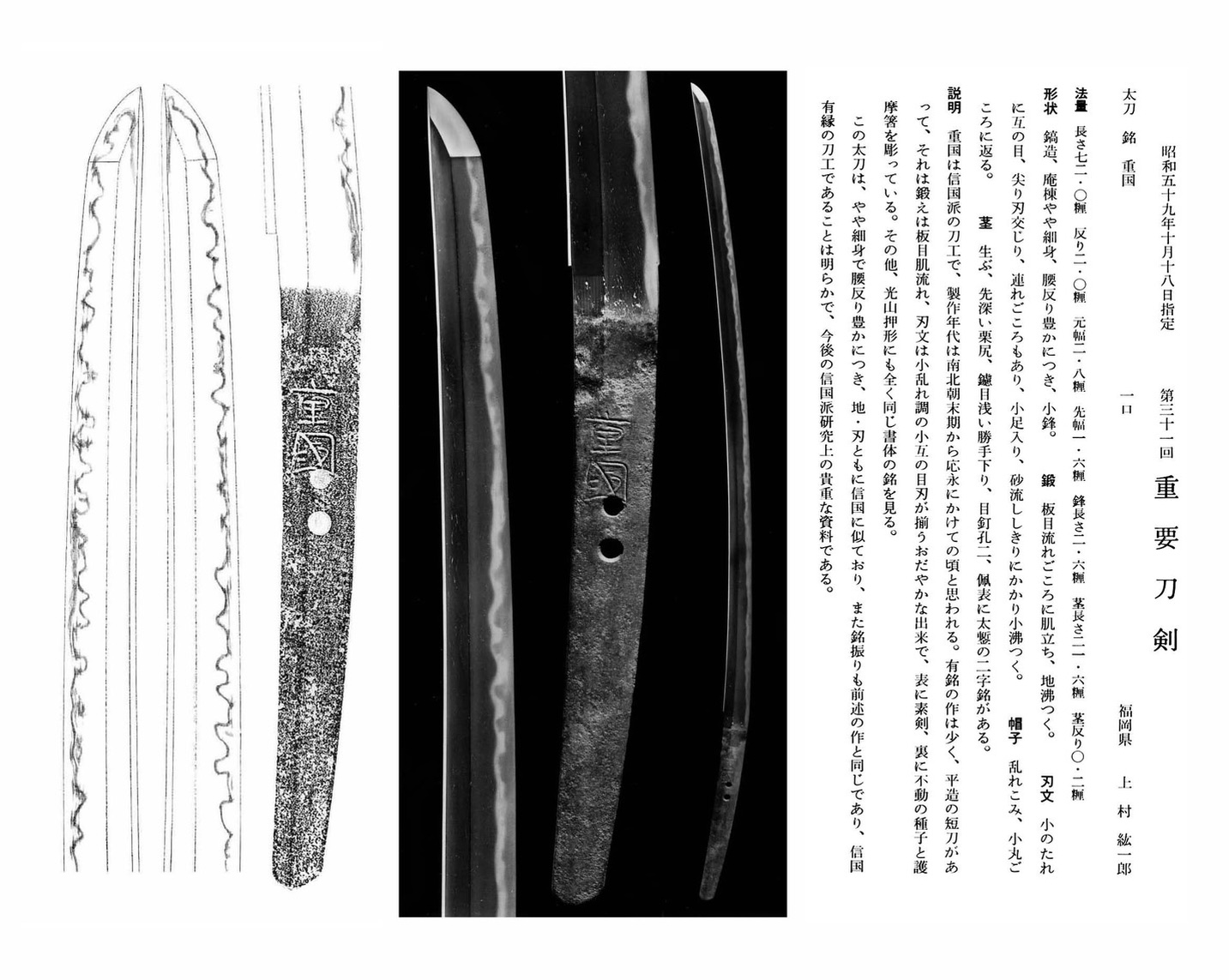
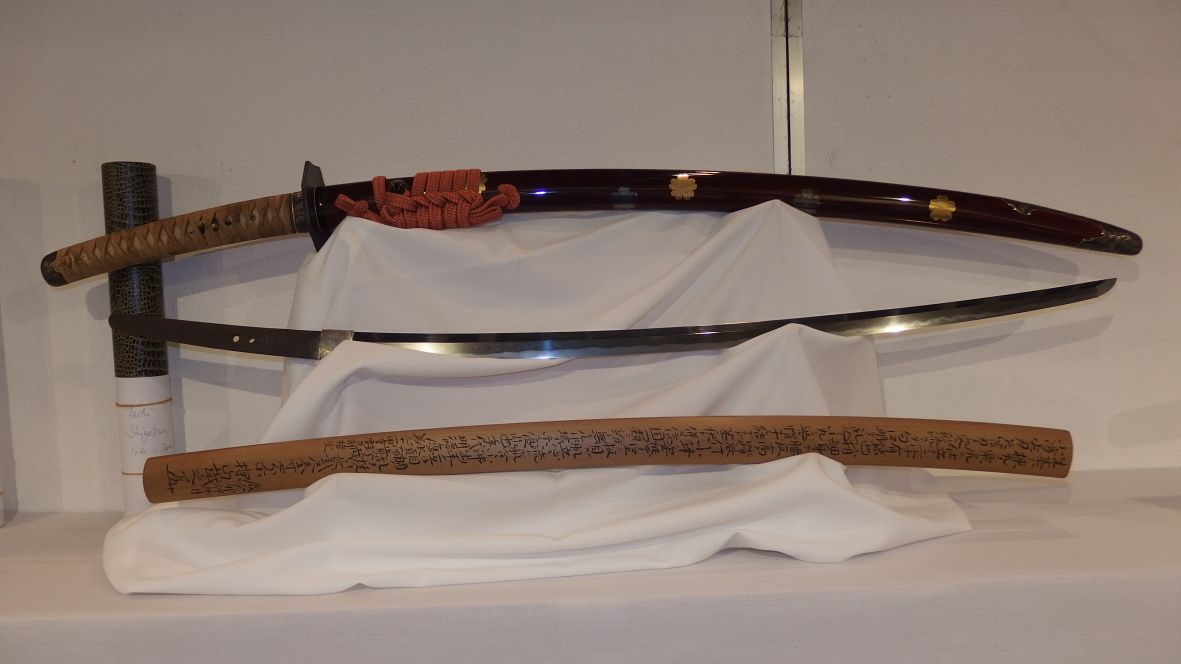
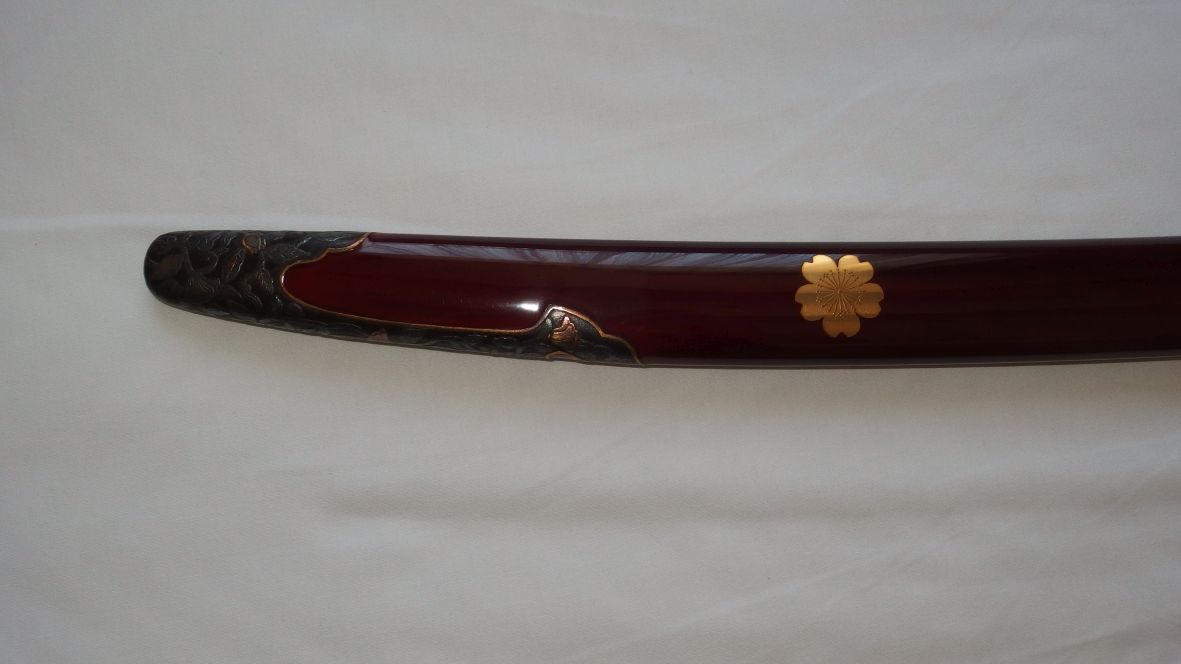
This tachi sword is an important artifact from the late Nanbokucho period to the Oei period (roughly the late 14th to early 15th centuries). Shigekuni, the maker of this sword, is part of the Nobukuni school, known for its high-quality swords. The sword was officially designated as an Important Sword (Juyo Token) in the 31st appraisal on October 18, 1984 (Showa 59).
Details and Historical Significance
Inscription (Mei): The blade bears the signature “Shigekuni” and is associated with Fukuoka Prefecture’s Kamimura Koichiro, possibly as a former owner or sponsor of its preservation.
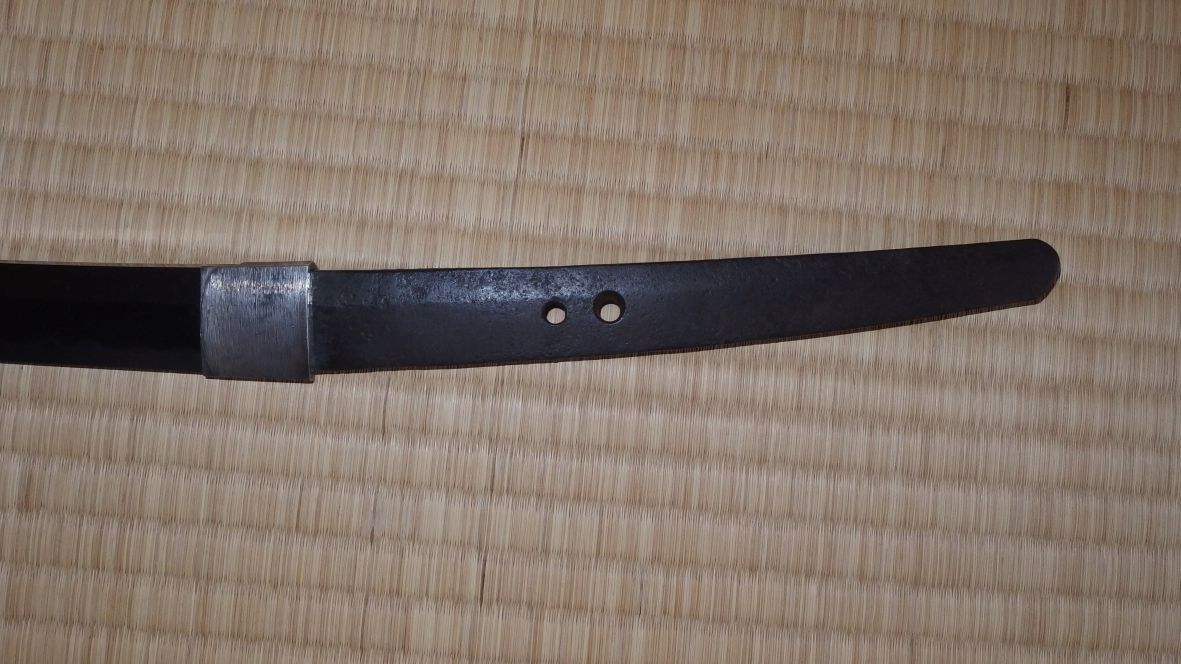
Nakago (Tang):
The tang is largely unaltered (ubu), with a deep-end shape known as kurijiri, typical of Japanese sword styles.
There are two peg holes (mekugi-ana) on the tang. The front side (ha-omote) has a two-character inscription engraved in deep gouges, suggesting significance, either marking a style or technique.
Swordsmith Background (Shigekuni and Nobukuni School)
Lineage: Shigekuni was part of the Nobukuni lineage, which was known for its skill in making swords during the Nanbokucho and Muromachi periods.
Production Era: It’s believed Shigekuni’s work dates from the end of the Nanbokucho period into the Oei period. Swords with Shigekuni’s inscription are rare, with a limited number of signed works surviving.
Sword Specifications
Measurements:
Length: 72 cm (approximately 28.3 inches)
Curvature: 2.0 cm, emphasizing a pronounced curve (koshi-sori) in the lower part of the blade.
Width:
At the base (motohaba): 2.8 cm
At the tip (sakihaba): 1.6 cm
Other Features:
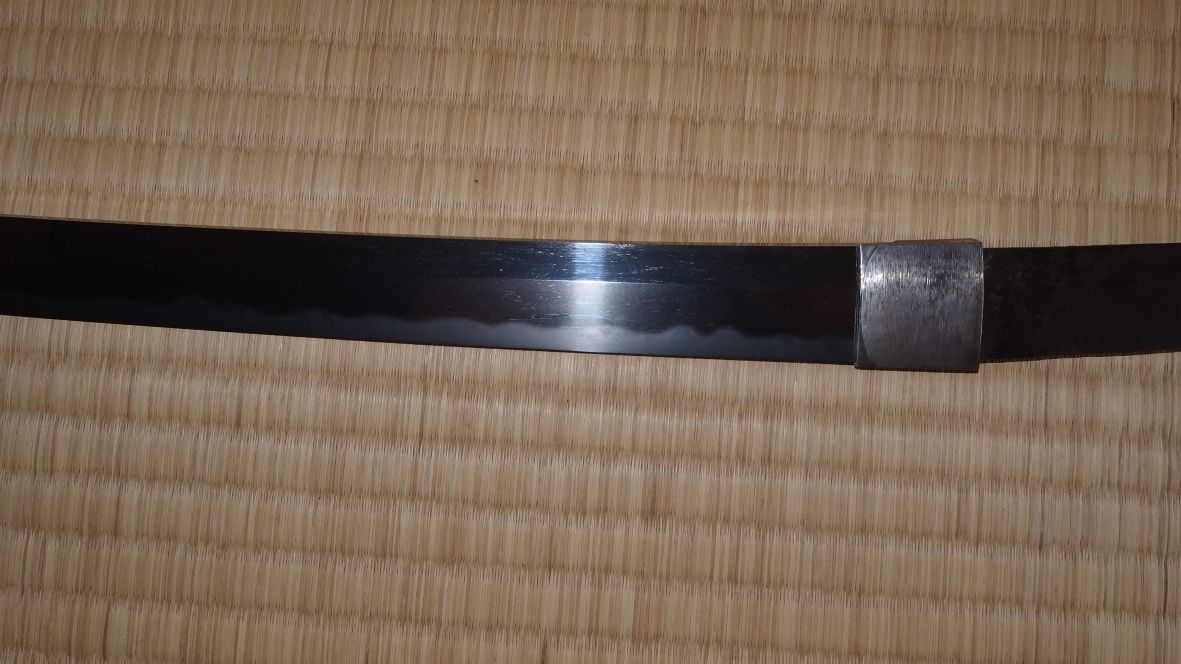
Blade Shape: Shinogi-zukuri (ridge-backed), with a slender body and rich curvature (koshi-sori), finishing with a small tip (ko-kissaki).
Crafting Techniques and Aesthetic Features
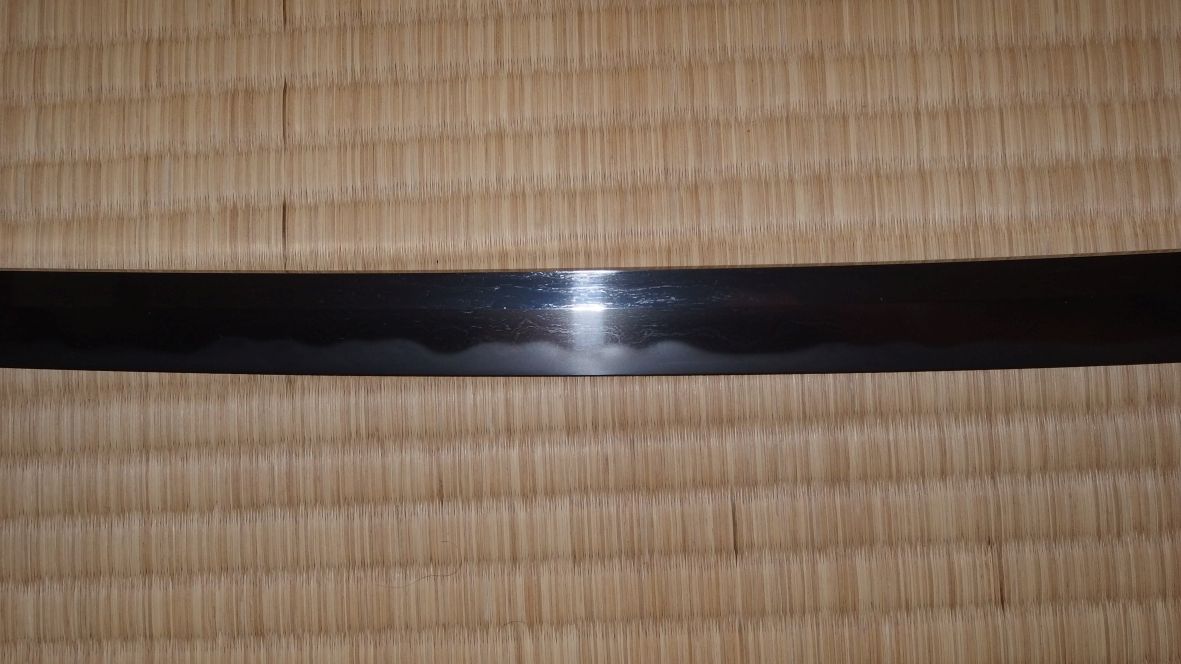
Blade Structure (Kitae): The forging pattern is itame-hada (wood-grain pattern) with a flowing texture (nagaregokoro). This pattern has an apparent texture, enhancing the blade’s elegance, while fine crystalline structures (ji-nie) give a reflective quality to the surface.
Hamon (Temper Line): The temper line is a gentle ko-notare (small undulating wave) mixed with gunome (wavy pattern) and togari-ba (pointed shapes). The tempering features tsure (connected sections), with small streaks (koashi) and prominent sunagashi (streak-like pattern), which show off Shigekuni’s detailed craftsmanship.
Boshi (Tip Temper Line): The tip has an irregular temper line (midarekomi), rounded off in a small turnback (komaru-go).
Artistic and Historical Importance
The blade’s slender form and rich curvature resemble those of Nobukuni works, confirming Shigekuni’s connection to the Nobukuni school. This tachi’s signature style and inscription match those found in other preserved records, like the Mitsuyama oshigata (blade copy records), showing it shares the same writing style. This makes it a vital piece for understanding Nobukuni-style craftsmanship.
Importance for Further Study
This tachi is a valuable resource for scholars studying the Nobukuni school, as it reflects the craftsmanship, techniques, and styles passed down within the lineage. Its similarities to Nobukuni’s work further affirm Shigekuni’s role within this famous lineage and provide a tangible link to the sword-making traditions of the period.