


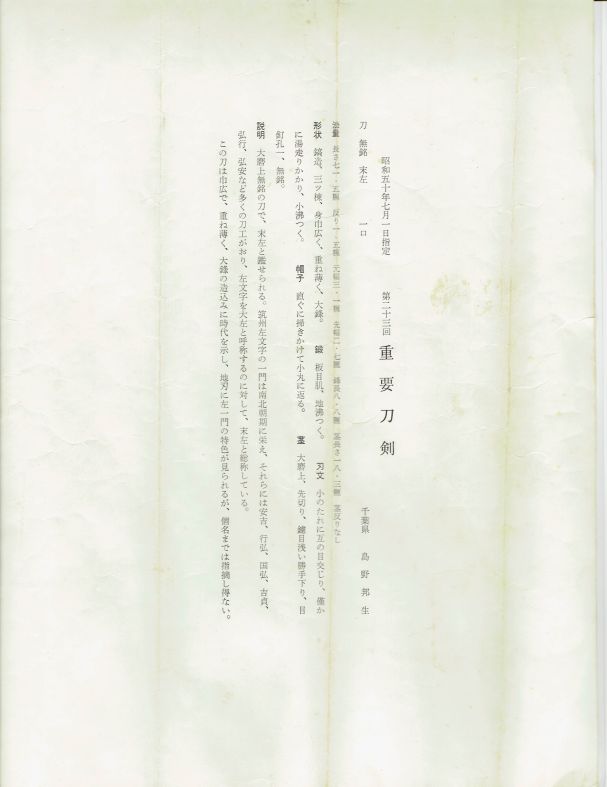








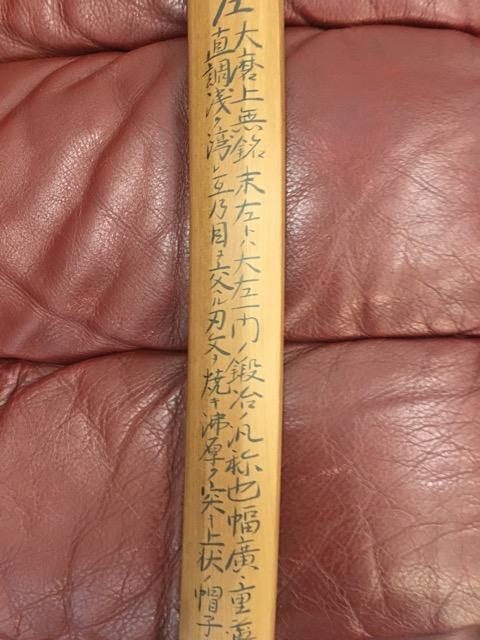


Jūyō-tōken at the 23rd jūyō shinsa held on July 1, 1975
katana, mumei: Sue-Sa (末左)
Chiba Prefecture, Shimano Kunio (島野邦生)
Measurements
nagasa 71.5 cm, sori 1.5 cm, motohaba 3.1 cm, sakihaba 2.7 cm, kissaki-nagasa 8.8 cm, nakago-nagasa
18.3 cm, no nakago-sori
Description
Keijō: shinogi-zukuri, mitsu-mune, wide mihaba, thin kasane, ō-kissaki
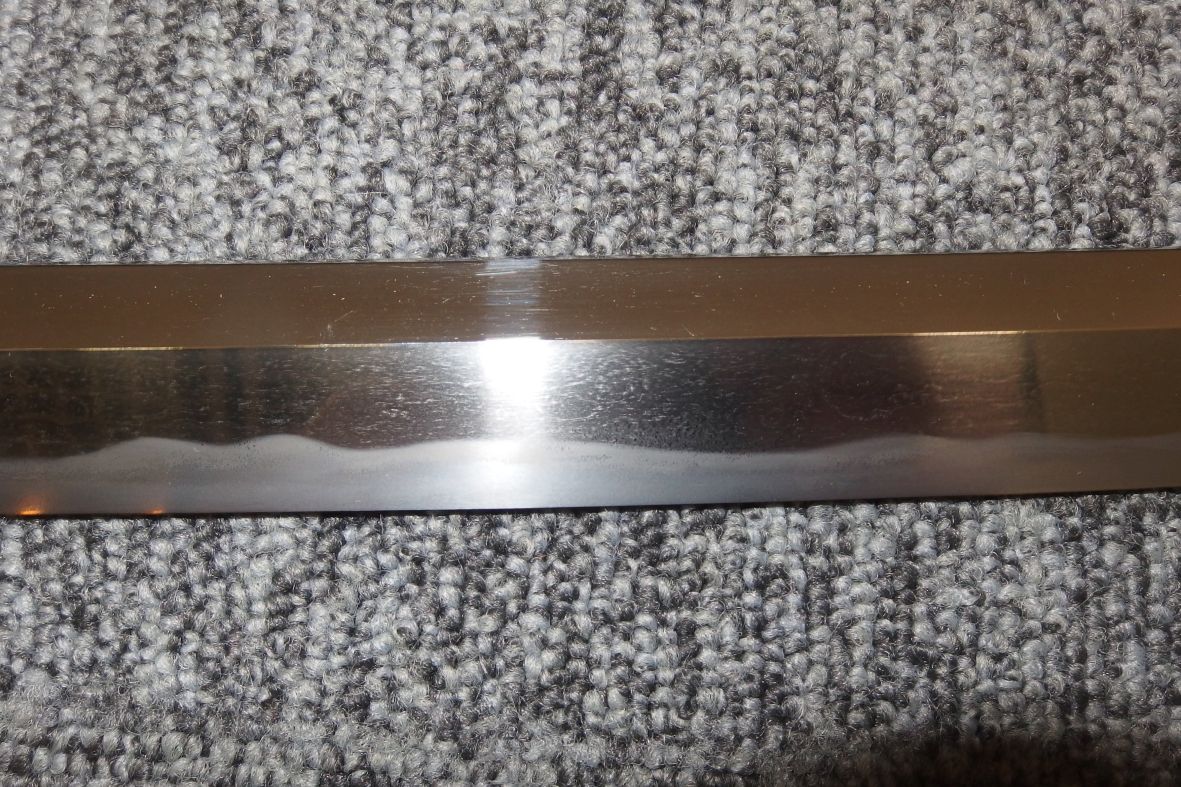
Kitae: itame that features ji-nie
Hamon: ko-notare in ko-nie-deki that is mixed with gunome and a few yubashiri
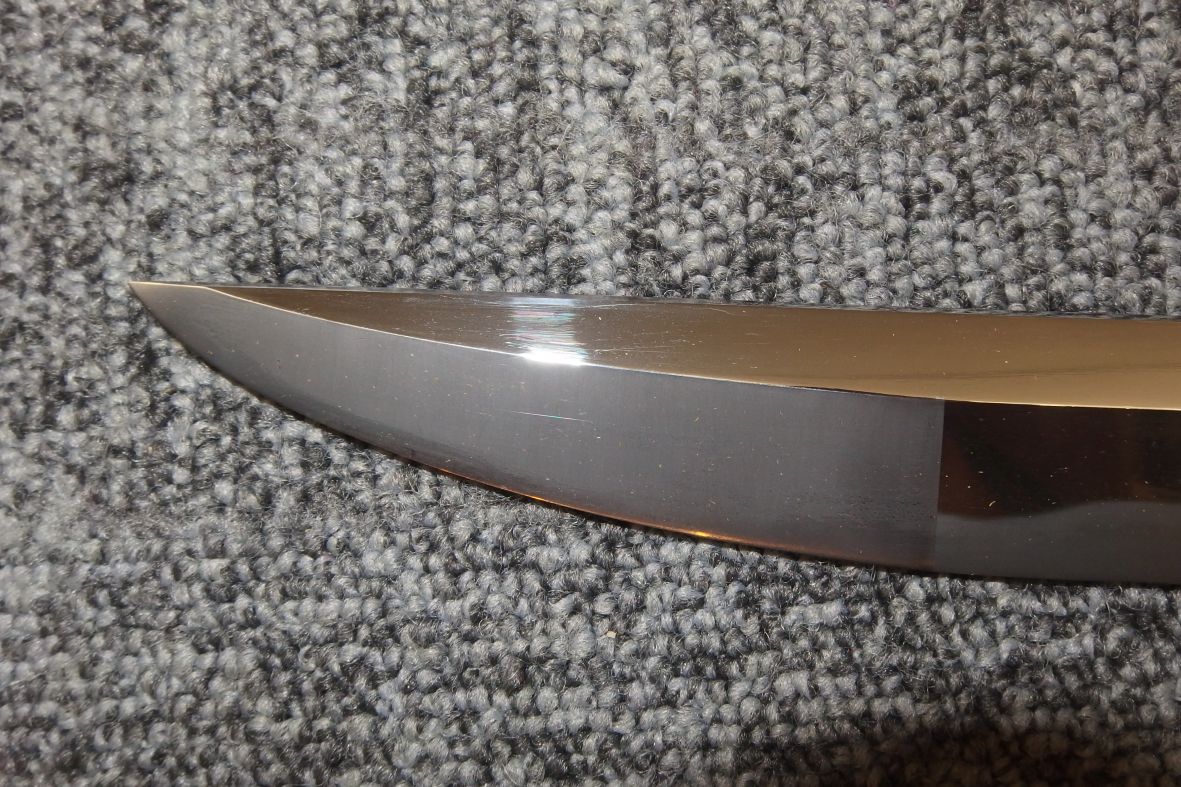
Bōshi: sugu with a ko-maru-kaeri and hakikake
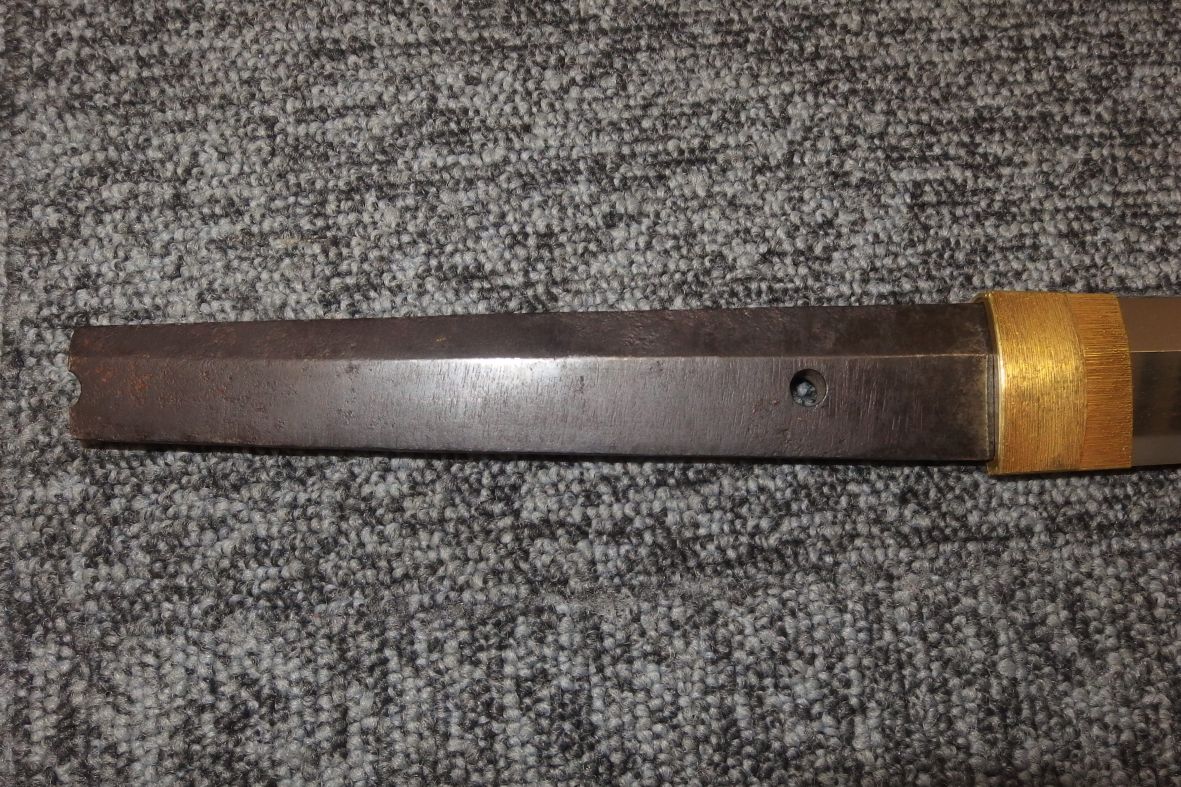
Nakago: ō-suriage, kirijiri, gently slanting katte-sagari yasurime, one mekugi-ana, mumei
Explanation
This is an ō-suriage mumei katana that can be attributed to Sue-Sa. The Chikuzen-based Samonji
School flourished in the Nanbokuchō period and gave rise to many smiths, e.g., Yasuyoshi
(安吉), Yukihiro (行弘), Kunihiro (国弘), Yoshisada (吉貞), Hiroyuki (弘行), and Hiroyasu (弘安).
In terms of attributions, master Samonji is referred to as Ō-Sa (大左) and his students to as SueSa (末左).
This katana has the typical wide mihaba, thin kasane, and ō-kissaki for its production time. The
jiba shows the features which all Sa students have in common but which do not point towards
the hand of an individual Sue-Sa smith
Jūyō No. 5095
Certificate
katana, mumei: Sue-Sa (末左)
Nagasa 71.5 cm, sori 1.5 cm,
Shinogi-zukuri, mitsu-mune, ō-kissaki; Kitae: itame; Hamon: ko-notare that is mixed with gunome and
a few yubashiri; Bōshi: sugu with a ko-maru-kaeri and hakikake; Nakago: ō-suriage, kirijiri, gently
slanting katte-sagari yasurime, one mekugi-ana
According to the result of the shinsa committee of our society we judge this work as authentic
and rank it as Jūyō-Tōken.
July 1, 1975
[Juridical Foundation] Nihon Bijutsu Tōken Hozon Kyōkai, NBTHK
[President] Honma Junji (本間順治)
第廿三回重要⼑剣指定品
筑前國末左
⼤磨上無銘末左トハ⼤左⼀⾨ノ鍛冶ノ汎称也幅廣・重薄⼤鋒ノ雄勁ナル延⽂・貞治型ノ姿態ヲ
⽰シ地沸ヲ敷ク板⽬ノ地銕ニ鍛へ直調浅ク湾レ互乃⽬ヲ交ヘル刃⽂ヲ焼キ沸厚ク突キ上状ノ帽
⼦ヲ呈スナド個名ヲ俄カニ指摘シへナイマデモ⼀⾨ノ特⾊ヲ明⽰スル優品也
⻑弐尺参⼨六分弱
時在⼰亥皐⽉
探⼭識「花押」
Dai nijūsan-kai jūyō-tōken shitei-hin
Chikuzen no Kuni Sue-Sa
Ō-suriage mumei Sue-Sa to wa Ō-Sa no ichimon no kaji no hanshō nari haba hiroi, kasane usui ō-kissaki
no yūkei naru Enbun-Jōji-kei no shitai o shimeshi ji-nie o ashiku itame no jigane ni kitae sugu-chō asaku
notare gunome o majieru hamon o yaki nie atsuku tsukiage-jō no bōshi o tei-su nado komei o niwaka ni
shiteki-shie nai made mo ichimon no tokushoku o meiji-suru yūhin nari.
Nagasa ni-shaku san-sun roku-bu yowai
Jizai tsuchinoto-i satsuki
Tanzan shirusu + kaō
Designated as a jūyō at the 23rd jūyō shinsa
Sue-Sa from Chikuzen Province
[This blade is] Ō-suriage mumei. Sue-Sa is an umbrella term for the students of master Ō-Sa. The
blade has a wide mihaba, a think kasane, and an ō-kissaki and is thus of a powerful Enbun-Jōji-sugata.
Its jigane is an itame that features ji-nie and the blade is hardened in a nie-laden suguha-based
hamon that tends somewhat towards a gently undulating notare and that is mixed with gunome.
The bōshi starts to turn back late and when we combine all this, we arrive at a masterwork that
shows the features which all Ō-Sa students have in common but which do not point towards the
hand of an individual Sue-Sa smith.
Blade length ~ 71.5 cm
Written by Tanzan [Tanobe Michihiro] in May of the year of the boar of this era (2019) + monogram